






Trends in Fiber Optic Lighting for the Coming Years: A Professional Interpretation from Technological Evolution to Market Application
Event Background
At the 2024 International Lighting Exhibition (Light+Building), multiple companies showcased lighting solutions based on plastic optical fiber (POF) and quartz optical fiber. Among them, the "passive fiber optic lighting system," which operates without electricity and relies solely on natural light transmission, drew industry attention. Around the same time, China's Ministry of Industry and Information Technology released the "Guidelines on Promoting the Coordinated Development of New-Type Information Infrastructure," which for the first time included fiber optic lighting technology the recommended list of "new energy-efficient lighting technologies." These signals indicate that fiber optic lighting is penetrating from niche markets into general lighting applications.
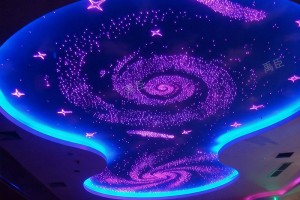
Technological Evolution and Market Impact
From a technological perspective, the core advantage of fiber optic lighting lies in the "separation of light and electricity." Traditional LED lighting relies on circuit connections, whereas fiber optic lighting uses a light source unit to emit light centrally, which is then flexibly transmitted through optical fibers to the endpoint, achieving zero electromagnetic radiation, low-temperature operation, and waterproof/explosion-proof capabilities. Currently, companies like Sumitomo Electric Industries in Japan and Schott in Germany have introduced plastic optical fiber products with a luminous efficacy of 80 lm/W, approaching the energy efficiency levels of LED light sources. A domestic fiber optic manufacturer (anonymized as Huaguang Technology) achieved mass production of 0.5mm-diameter optical fibers in the third quarter of 2023, reducing transmission loss per fiber to 0.15 dB/m—a 40% decrease compared to 2020.
On the application side fiber optic lighting is rapidly expanding into medical, museum, and underwater lighting sectors. For example, a provincial-level museum adopted a fiber optic lighting system from a company (anonymized as Wenbao Lighting) to replace traditional halogen lamps, resolving the temperature rise issue caused by infrared radiation in artifact display cases. The surface temperature fluctuation of exhibits was controlled within ±0.5°C. Additionally, following the 2024 revision of Europe's "Green Building", new commercial buildings are required to have at least 15% of their lighting come from non-electric sources, providing a policy window for fiber optic lighting in applications such as building light pipes and emergency lighting systems.
Company Position and Industry Recommendations
Based on the above trends, our company recommends that the industry focus on following directions:
Integration of Light Source Units: Integrate LED chips and fiber optic couplers into a single module to reduce system costs. Referring to the "light engine" solution jointly developed by our company and a research institution, coupling efficiency can be increased from 75% to 92%.
Modification of Fiber Optic Materials: Develop fluorine-containing polymer cladding fibers to meet the demands for high-temperature resistance (above 80°C) and flame retardancy. Laboratory samples have already passed UL94 V-0 certification.
Joint Establishment of Standards: It is recommended that industry associations take the lead in developing testing standards for luminous efficacy, color temperature, and lifespan of fiber optic lighting systems to prevent the market from falling into low-price competition due to inflated parameter claims.
Industry Evaluation
In an interview with Lighting magazine, the Secretary of the China Lighting Electrical Appliances Association noted: "Fiber optic resolves the conflict between safety and energy efficiency in traditional lighting for special scenarios, but it is important to note that its initial installation cost is 30%–50% higher than that of LEDs. Over the next three years, as the localization rate of fiber optic preforms rises to over 60%, costs are expected to decrease by 20%." (Source: Company News | Editor: Li Mingyuan)
Editor's Note: This article is based on publicly available information from 2024 industry exhibitions and policy documents. It is suitable for technical planning in lighting companies, product line evaluation by marketing departments, and investor analysis. Data cited in the article comes from publicly disclosed corporate reports or third-party testing reports and does not involve trade secrets.
 WhatsApp
 Follow WeChat