






Technology Explained | Fiber Optic Lighting vs. LED Lighting: A Comparison of Pros and Cons and a Guide to Scenario Selection
With the deepening of global energy-saving and emission-reduction policies and the continuous iteration of lighting technology, how to make a scientific, economical, and scenario-appropriate choice among numerous lighting solutions has become a core issue of common concern for architects, engineering parties, and end-users. Recently, relevant national departments have further clarified the policy direction encouraging the adoption of green lighting technologies that are efficient, long-lasting, and have low maintenance costs in public buildings and key projects. This policy trend has once again pushed the comparison between fiber optic lighting and LED lighting—two mainstream technologies—to the forefront of industry discussion.
I. Technical Principles and Core Characteristics
To understand their applicable scenarios, it is first necessary to clarify their fundamental technical differences.
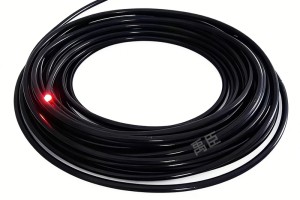
Fiber Optic Lighting is a lighting system that separates the light source generator (host) from the light-emitting terminals (optical fibers). The light source generator is typically placed in a location convenient for maintenance. The light it emits is transmitted through special fiber optic bundles to remote points, where it is emitted from the ends or sides of the fibers. Its core advantage lies in the physical separation of "light" and "electricity." This means the light-emitting points themselves are non-electrified, generate no heat, produce no electromagnetic interference, and possess intrinsic safety characteristics. Furthermore, the optical fibers themselves are small in size, flexible, and moldable, enabling dynamic color changes and complex pattern formations.LED Lighting is a solid-state light source technology based on semiconductor light-emitting diodes. It converts electrical energy directly into light energy, boasting prominent features such as high energy efficiency, fast response, long lifespan, compact size, and good directionality. After years of development, LED technology has made significant progress in luminous efficacy, color rendering, intelligent control, and cost control, becoming the absolute mainstream in general lighting.II. Comprehensive Analysis of Pros and Cons
In practical applications, the two technologies present a complementary rather than a completely substitutive relationship.
In terms of safety and environmental adaptability, fiber optic lighting holds significant advantages. Due to the non-electrified, cold-light nature of its emission points, it is exceptionally suitable for special environments that are flammable, explosive, dusty, humid, subject to strong electromagnetic interference, or sensitive to heat, such as petrochemical facilities, museum display cases for artifacts, swimming pools, and medical cleanrooms. Additionally, in situations requiring artistic effects like pure starry skies or delicate halos, fiber optic lighting can achieve a softness and precision difficult for LEDs to match.Regarding comprehensive energy efficiency, cost, and maintenance convenience, LED lighting is more universally applicable. The luminous efficacy (lm/W) of LEDs has far surpassed that of traditional light sources and most fiber optic lighting systems. Under the same illuminance requirements, the long-term operational energy cost of LEDs is typically lower. Simultaneously, LED luminaires feature high integration and simple installation; later maintenance usually only requires replacing modular fixtures. In contrast, if a fiber optic lighting system experiences fiber breakage or host failure, the repair requires more specialized skills and tends to be costlier. For the vast majority of conventional lighting scenarios such as offices, shopping malls, roads, and homes, LED is currently the optimal solution.III. Guide to Scenario Selection
The key to choosing which technology lies in accurately matching the core needs of the scenario.
Scenarios where fiber optic lighting is preferred:
Safety-first zones: Hazardous areas with explosion-proof requirements, such as chemical plants, military facilities, and fuel depots.
Lighting sensitive objects: Precious collections, textiles, ancient books, etc., in museums and archives, requiring the elimination of UV and IR radiation damage.
Complex decorative and artistic lighting: Architectural contour outlining, starry ceiling installations, underwater light strips, thematic decorations requiring flexible color changes, etc., leveraging the moldability and dynamic color systems of fiber optics.
Harsh physical environments: Locations with high temperature, high humidity, strong corrosion, or severe vibration, where the host can be placed in a safe area, with only the more durable fiber part exposed to the harsh environment.
Scenarios where LED lighting is preferred:
General functional lighting: Basic lighting for all types of indoor and outdoor spaces, such as office lighting, classroom lighting, road lighting, parking lot lighting, etc., pursuing high luminous efficacy, long lifespan, and low-cost maintenance.
Accent and display lighting: Window displays, shelf accent lighting in commercial spaces, situations requiring high color rendering and precise beam angles.
Smart and connected lighting: Systems requiring deep integration with the Internet of Things (IoT) to achieve intelligent control functions like dimming, color temperature adjustment, on-demand lighting, and data collection.
Retrofit projects and cost-sensitive projects: Lighting upgrades based on existing electrical circuits, or projects with limited initial investment budgets, where LED is typically more economical.
IV. Our Professional Perspective and Practice
Faced with technological choices, we always adhere to the principle that "the scenario defines the technology, not the technology defines the scenario." We not only provide a full range of advanced LED lighting solutions to meet the mainstream market demand for high efficiency, energy savings, and intelligence, but we also have deep expertise in the field of special lighting, possessing mature and reliable capabilities in fiber optic lighting system design and implementation.
We believe that for future high-end lighting projects, especially landmark buildings, large cultural tourism projects, and special industrial facilities, a hybrid lighting design philosophy of "LED as the mainstay, supplemented by fiber optics" will become a trend. By organically combining the high efficiency and universality of LEDs with the safety and artistry of fiber optics, it is possible to simultaneously achieve energy efficiency goals, safety redundancy, and unique artistic expression within a single project.
We have successfully applied this concept in several large-scale complexes and special venue projects. Through in-depth preliminary lighting consultancy services, we have provided clients with tailored hybrid lighting plans. We are honored to leverage our comprehensive technical expertise and rich project experience to help clients find the optimal lighting path amidst complex decision-making.
If you are planning a new construction project or a lighting retrofit/upgrade, please feel free to contact our technical consultant team for professional analysis and proposal recommendations tailored to your specific scenario.
Editor's Note: This article aims to provide a clear reference for industry professionals facing lighting technology selection decisions, based on the essence of the technologies and application logic. For specific projects, final decisions should still be made in conjunction with detailed illuminance calculations, cost analysis, and lifecycle assessment.
 WhatsApp
 Follow WeChat