





Between 2005 and 2015, global energy consumption increased by 40%, while related carbon dioxide emissions rose by 30%. (Eia.gov) It is projected that by 2040, we will still need an additional 40% of energy, equivalent to approximately 800 trillion British thermal units. However, 77% of this will come from non-renewable fossil fuels. As we proposed in 2014, energy demand over the next 25 years will increase exponentially. Therefore, all sectors should now improve energy efficiency to mitigate future challenges.
Governments in many countries are increasingly aware of the urgency of utilizing global energy more effectively. Enhancing energy efficiency is the most economical and mature approach to ensuring energy security and reducing greenhouse gas emissions. For instance, the European Union has set a target to reduce energy consumption by 20% by 2020. China’s latest economic development plan provides financial incentives for local governments and industrial enterprises to encourage them to explore a wide range of energy-saving projects. The goal is to conserve approximately 250 million tons of coal equivalent and prevent over 600 million tons of carbon dioxide emissions.
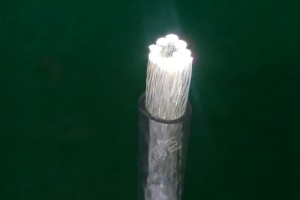
To this end, since 2012, we have focused on the development of UV-LED curable coatings, which offer high-performance optical fiber characteristics and utilize optimal energy conditions for curing. Compared to the microwave lamps currently used in the optical fiber industry, UV-LED technology is expected to reduce energy consumption by 80%. In this paper, we discuss UV-LED curable coatings under different lamp manufacturers and power conditions.
We have conducted extensive experiments with multiple UV-LED lamp suppliers using an in-house draw tower simulator (DTS) and completed numerous fiber draws on actual draw towers. Building on previous research, we have evaluated various optical fiber/coating properties, such as degree of cure, adhesion, strip force (SF), mechanical properties, dynamic fatigue parameters (nd value), tensile strength, and microbending attenuation.
 WhatsApp
 Follow WeChat